Demolition projects are exciting — tearing out the old to make way for something better. But all that excitement comes with a serious amount of debris. From interior gut jobs to full structure teardowns, demolition debris removal is one of the most critical aspects of project planning that often gets overlooked until the rubble starts piling up.
This guide covers everything you need to know about planning, managing, and disposing of demolition debris in the Bay Area — from permits and safety to choosing the right dumpster for the job. At TP Dumpsters, we've helped contractors and homeowners across Oakland, Concord, Richmond, and the greater Bay Area manage demolition waste efficiently and affordably.
Planning Your Demolition Project
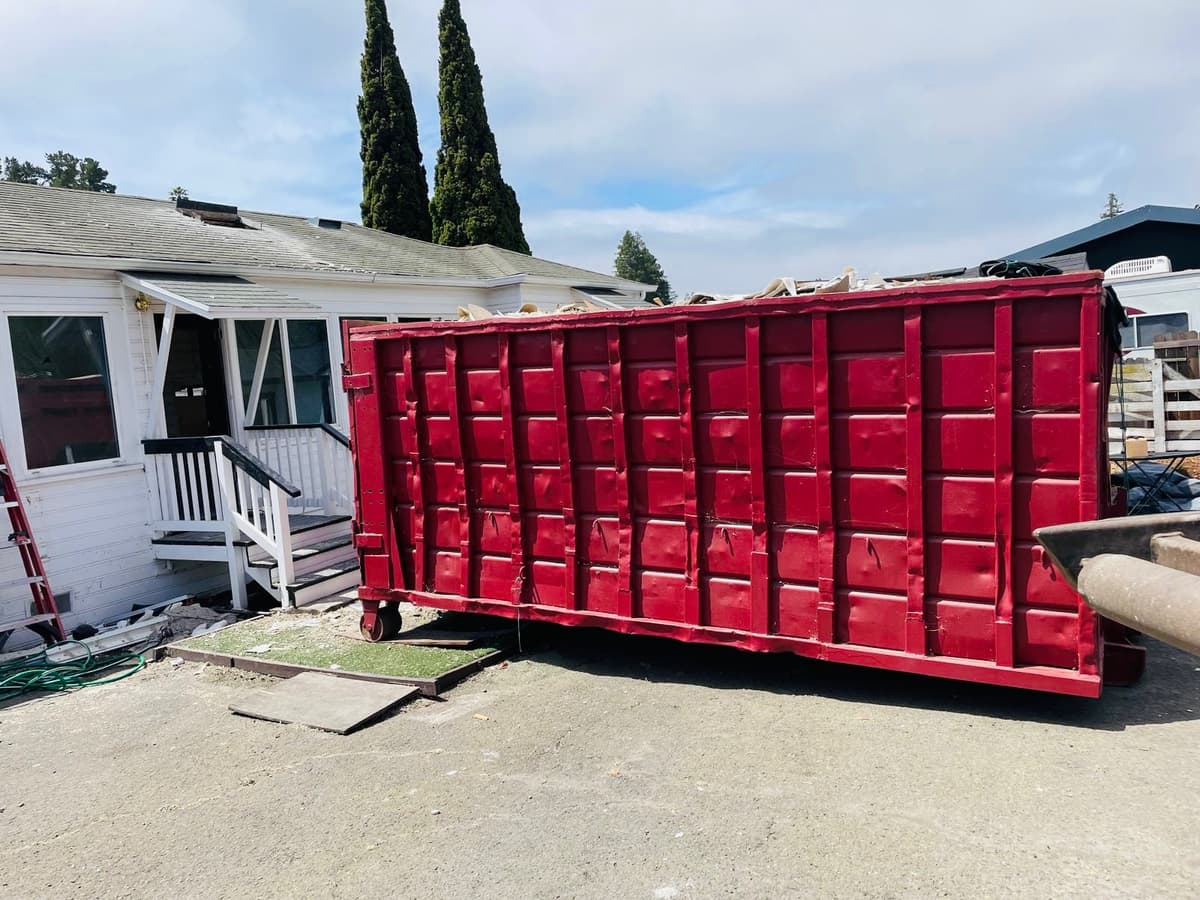
Whether you're knocking down a garage, gutting a kitchen, or doing a complete interior strip-out, proper planning makes the difference between a smooth project and a chaotic one. Here's how to plan your demolition debris removal:
1. Assess the Scope
Before swinging a sledgehammer, walk through the space and inventory what's coming out:
- Structural elements — Walls, framing, subfloor, ceiling materials
- Fixtures and finishes — Cabinets, countertops, tile, flooring, trim
- Mechanical systems — Old plumbing, wiring, ductwork, HVAC units
- Exterior elements — Siding, roofing, concrete, masonry, fencing
This inventory helps you estimate the volume of debris you'll generate and choose the right dumpster size. For most interior demolitions, a 20-yard dumpster handles the job. Full structure teardowns or large-scale demos typically call for a 30-yard dumpster — or multiple containers on rotation.
2. Check for Hazardous Materials
Before any demolition begins, especially in older buildings (pre-1980), you must check for hazardous materials:
- Asbestos — Found in insulation, floor tiles, popcorn ceilings, pipe wrap, and siding in homes built before 1980. California law requires testing before demolition and certified abatement if present.
- Lead paint — Common in homes built before 1978. Demolition that disturbs lead paint creates hazardous dust requiring special handling.
- Mold — Especially in water-damaged areas. Disturbing mold during demo can spread spores and create health hazards.
⚠️ Important Safety Warning
Never demolish a structure without first checking for asbestos and lead paint — it's not just dangerous, it's illegal in California. Hire a certified inspector before starting any demolition on pre-1980 buildings. Hazardous materials cannot go in a standard roll-off dumpster and require specialized disposal.
3. Obtain Necessary Permits
Most demolition work in Bay Area cities requires permits. Here's what to expect:
- Demolition permits — Required for structural demolition in virtually all Bay Area jurisdictions. Costs vary by city and project scope.
- Utility disconnection — You must disconnect gas, electric, water, and sewer before structural demolition. Coordinate with PG&E and your local water district.
- Encroachment permits — If your dumpster will be placed on a public street or sidewalk, most cities require an encroachment permit.
- Environmental review — Larger demolitions may require CEQA (California Environmental Quality Act) review.
- Waste management plan — California requires a plan showing how you'll divert at least 65% of C&D waste from landfills.
Check with your local building department for specific requirements. In Oakland, permits are handled through the Planning & Building Department. Concord and other Contra Costa County cities have their own permitting processes.
What Goes in a Demolition Dumpster
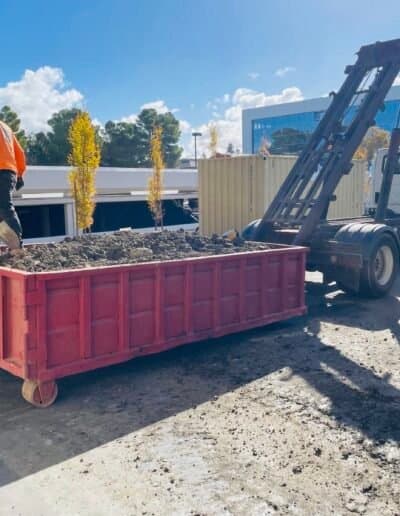
A standard roll-off dumpster can handle the vast majority of demolition debris. Here's what's typically accepted:
✅ Accepted Demolition Materials
- Lumber, plywood, and wood framing (untreated)
- Drywall, plaster, and lath
- Concrete, brick, and block (note: very heavy — inform your hauler)
- Roofing shingles and underlayment
- Tile, stone, and masonry
- Metal (framing, ductwork, pipes, rebar)
- Carpet and padding
- Vinyl and laminate flooring
- Cabinets, doors, and window frames
- Insulation (non-asbestos)
❌ Prohibited Materials
- Asbestos-containing materials (requires specialized disposal)
- Lead paint chips and dust in large quantities (hazardous waste)
- Chemical solvents, adhesives, and coatings
- Fluorescent light tubes and ballasts (contain mercury)
- Refrigerators, AC units, and appliances with refrigerant (require Freon removal first)
For the full list of accepted and prohibited items, see our detailed guide: What Can (and Can't) Go in a Dumpster.
Safety During Demolition
Demolition is inherently dangerous work. Whether you're a professional contractor or a DIY homeowner, follow these safety essentials:
Personal Protective Equipment (PPE)
- Hard hat — Falling debris is the #1 risk on any demo site
- Safety glasses or goggles — Protect against dust, fragments, and splinters
- N95 or P100 respirator — Essential for dust control, especially with drywall, concrete, and insulation
- Heavy-duty gloves — Protect hands from sharp edges, nails, and splinters
- Steel-toe boots — Dropped materials and exposed nails are constant hazards
- Hearing protection — Power tools and impact noise can cause permanent hearing damage
Job Site Safety
- Ensure all utilities are disconnected before starting structural demolition
- Work from top to bottom — remove upper floors/roof before lower walls
- Never undercut a wall or remove structural supports without a plan
- Keep the dumpster close to the work area to minimize carrying distance
- Clean debris as you go — don't let it accumulate on floors where people are working
- Never work alone on structural demolition
Demolition Timeline & Dumpster Scheduling
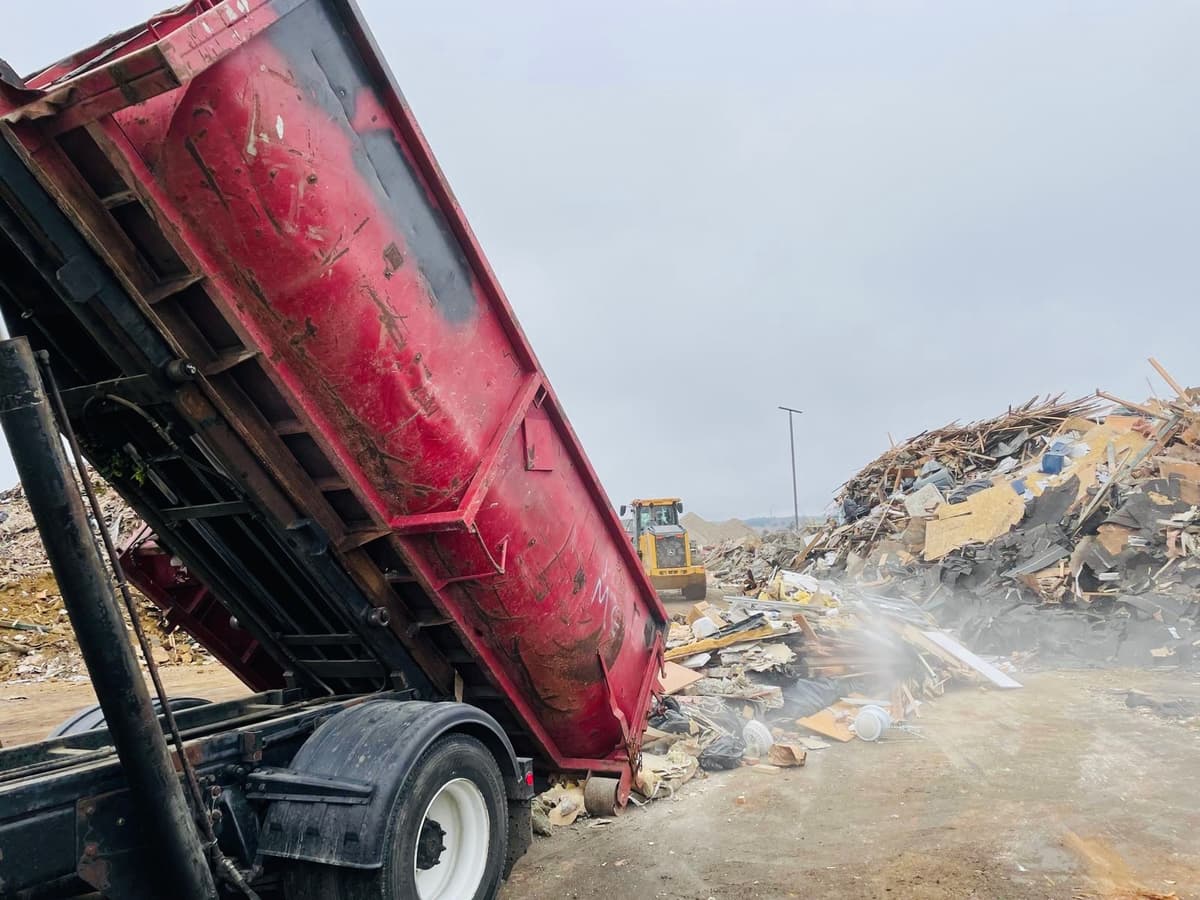
Coordinating your dumpster rental with your demolition timeline is crucial for maintaining productivity and keeping costs down:
Small Interior Demo (1-3 days)
Single room or bathroom gut: Order a 10 or 20-yard dumpster to arrive the morning of demo day. A standard 3-5 day rental is usually sufficient.
Medium Renovation Demo (3-7 days)
Multi-room gut or kitchen/bath combo: A 20-yard dumpster with a 7-day rental covers most projects. If you're doing the demo in phases, you can load as you go throughout the week.
Large-Scale Demolition (1-3 weeks)
Full structure teardown or major commercial demo: Plan for a 30-yard dumpster with regular swap-outs. TP Dumpsters offers flexible scheduling with pick-up-and-replace service — when one container is full, we swap it for an empty one so your project never stops.
TP Dumpsters: Your Demolition Partner
Demolition projects need a waste management partner that's reliable, responsive, and understands the pace of construction. TP Dumpsters delivers:
- Same-day delivery — Demo day arrives faster than expected? We can get a dumpster to you fast.
- Flexible swap-outs — Full container? We'll replace it with an empty one, often same-day.
- Transparent pricing — One all-inclusive price. No surprises when the invoice arrives.
- Bilingual support — English and Spanish, serving our diverse Bay Area community.
- Compliant disposal — We route demo debris to certified C&D recycling facilities to help you meet California's 65% diversion requirement.
We serve contractors and homeowners across Oakland, Concord, Richmond, Hayward, Walnut Creek, San Leandro, and communities throughout the Bay Area.
Demolition Project Coming Up?
Get your dumpster on-site before the first swing. Same-day delivery, transparent pricing, flexible swap-outs.